
by Social Edge Ambassador: Ishita Singh
Introduction
In today’s world of endless deadlines, constant notifications, and growing to-do lists, deciding what to focus on can feel overwhelming. Most of us juggle multiple roles, and without a system, it’s easy to get caught up in tasks that feel urgent but aren’t truly important in the long run. That’s where the Eisenhower Matrix comes in—a simple yet powerful way to prioritize your time.
What is the Eisenhower Matrix?
The Eisenhower Matrix, also called the Urgent-Important Matrix, is a time management tool named after Dwight D. Eisenhower, the 34th President of the United States, known for his exceptional decision-making and productivity.
The idea is simple: sort your tasks based on two questions:
- Is it urgent?
- Is it important?
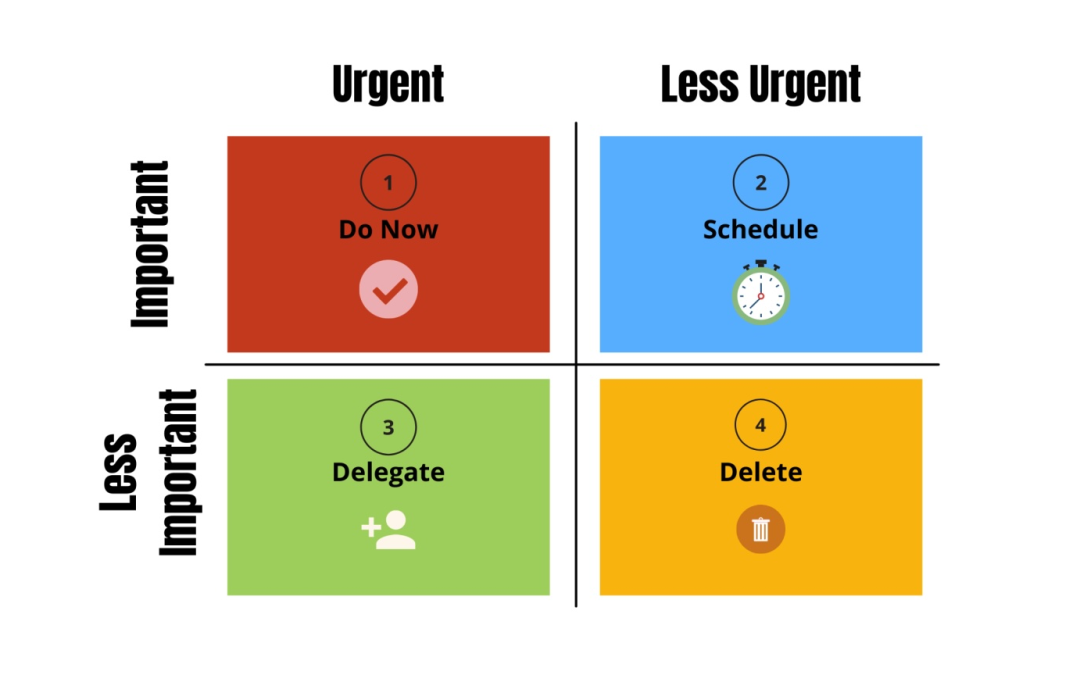
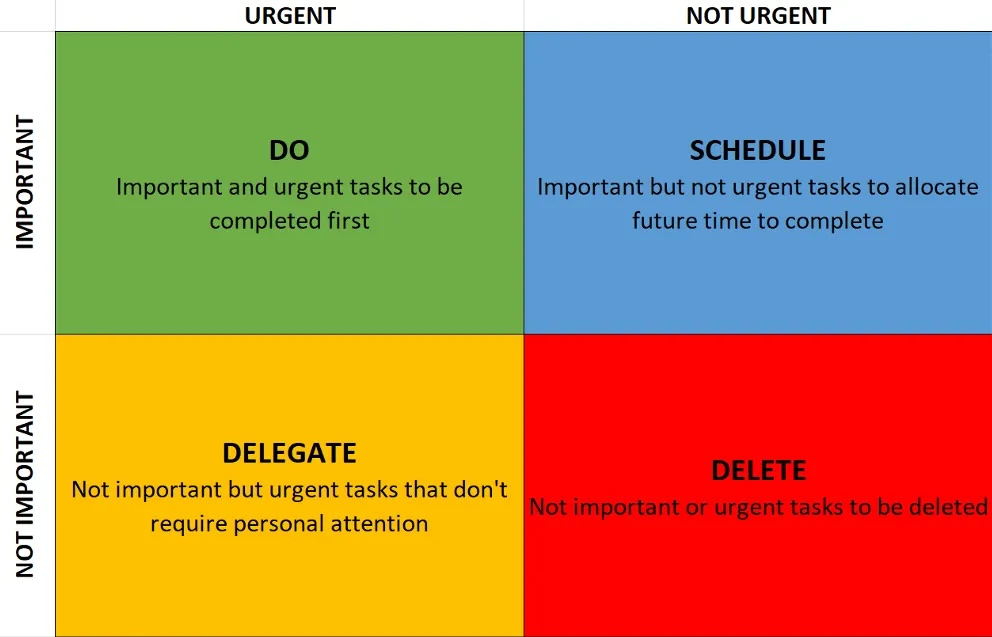
From there, tasks fall into one of four quadrants:
- Urgent & Important → Do it now
- Not Urgent but Important → Schedule it
- Urgent but Not Important → Delegate it
- Not Urgent & Not Important → Eliminate it
Breaking Down the Four Quadrants
Quadrant 1: Urgent & Important – Do Now
These are immediate priorities—deadlines, emergencies, and problems that can’t wait. Examples include submitting a project due tomorrow, fixing a major error, or studying for a test the next day.
Quadrant 2: Not Urgent but Important – Schedule It
This is where your long-term goals live. They may not need attention right this second, but they’re essential for your growth. Think: studying for a test well in advance, developing a skill, or planning a big project. Use calendars or reminders to make sure these tasks don’t get lost in the shuffle.
Quadrant 3: Urgent but Not Important – Delegate It
These tasks feel pressing, but don’t significantly contribute to your priorities—often they’re someone else’s. Examples: responding instantly to non-essential emails or group texts. Whenever possible, delegate or delay these.
Quadrant 4: Not Urgent & Not Important – Eliminate It
These are distractions—mindless scrolling, unnecessary busywork, or anything you do to avoid real priorities. While downtime is healthy, spending too much time here hurts productivity. Reduce or remove these tasks to free up focus for what matters.
Why It Works
The Eisenhower Matrix isn’t just a tool—it’s a mindset shift. It forces you to ask: What’s truly important? and What can wait?
By intentionally spending more time in Quadrant 2 (important, not urgent), you reduce stress, make steady progress on meaningful goals, and spend less time in Quadrant 4 (distractions). You’ll also get better at delegating, setting boundaries, and focusing on what moves you forward—rather than just what’s screaming for attention.
Real-Life Example
Take Maya, a high school junior with:
- A biology test
- A history essay
- Soccer practice
- A part-time job
Here’s how she sorts her week using the matrix:
- Quadrant 1: Study for the test, finish the essay
- Quadrant 2: Schedule work shifts
- Quadrant 3: Reply to debate team texts
- Quadrant 4: Clean her room, scroll social media
By tackling the test and essay first, then scheduling her work, she reduces stress and stays in control of her time—without sacrificing the things that matter most.
How to Get Started
Try starting your day—or your week—by writing down your tasks and placing each into a quadrant. You can do it in a simple notebook, on a whiteboard, or with digital tools and apps. Over time, you’ll notice patterns, learn where you waste time, and gain more control over your schedule.
Bottom line: The Eisenhower Matrix helps you stop reacting to everything and start acting on what really counts. Once you make it a habit, you’ll feel more focused, less stressed, and more in charge of your time.