
Authors: Jade Moya & Dr. Désia Bacon
Parents everywhere face tough decisions every day, such as what school to choose, how
to respond to a meltdown, and how to set limits around technology. While there’s plenty of
research on how these decisions affect children (Wong et al., 2019), there’s surprisingly little
about what happens before the decision is made. What guides parents when they decide what’s
best for their kids?
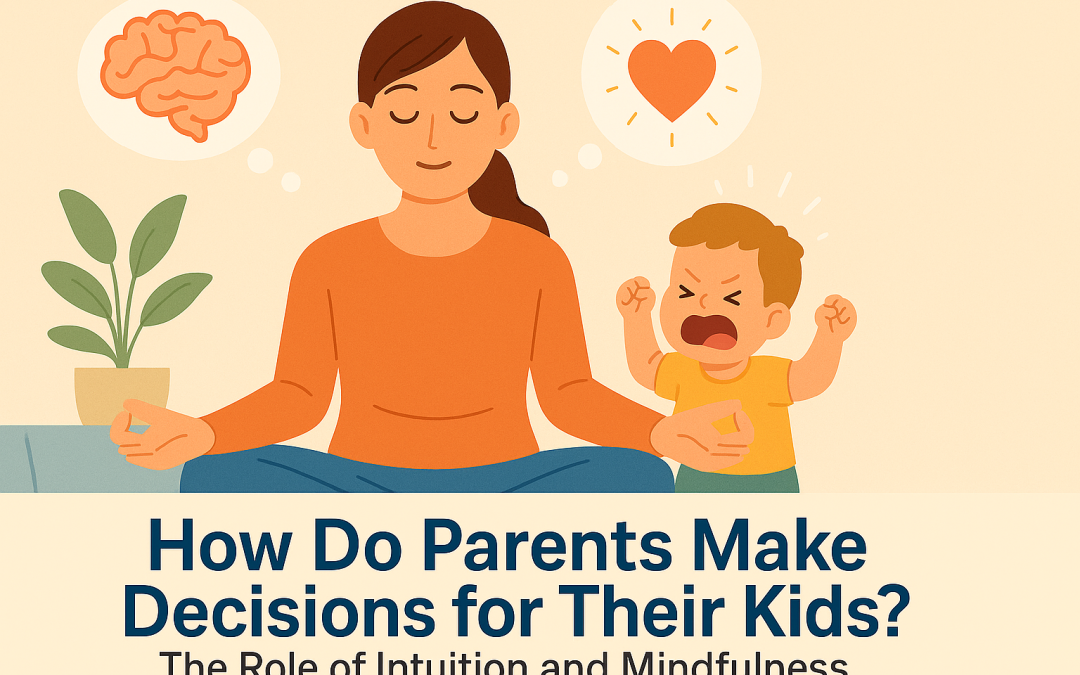
Researchers at San José State University (SJSU) are exploring this very question. They’re
looking at how intuition and mindfulness might influence parents’ decision-making for their
young children, ages 2- to 5-years-old.
What Do We Mean by Intuition and Mindfulness?
When you think of intuition, you might imagine those “gut feelings” that sometimes turn
out to be right. According to Cambridge University Press and Assessment (2025), intuition is
defined as “an ability to understand or know something immediately based on your feelings
rather than facts.” Many parents rely on their intuition, whether it’s making medical decisions for
their child or knowing when a certain approach for eating more broccoli will work better than
another for their child.
Mindfulness, however, “is the practice of being aware of your body, mind, and feelings in
the present moment” (Cambridge University Press and Assessment, 2025). A mindful parent
might pause before reacting, considering the bigger picture, and make choices that align with
their values and their child’s needs.
What Makes This Research Unique?
Most parenting research focuses on what decisions parents make or how those decisions
affect their children (e.g., Wong and colleagues’ (2019) study on mindful parenting and its role
for children at the individual and social level); however, few studies look at the thought
processes behind the decisions themselves. What drives a parent to make one choice over
another? This study aims to close that gap by examining the inner experiences that shape these
choices, such as a parent’s ability to stay present and the role of “gut feelings.”
By studying these factors, researchers at SJSU hope to better understand the
decision-making journey, not just the outcome. This could lead to new tools and resources that
help parents feel more confident, calm, and connected when making everyday choices,
particularly those that impact their preschool-aged children.
Why Does This Matter?
The early childhood years (ages 2- to 5-years-old) are full of important decisions: from
routines and discipline, to play and learning opportunities. Understanding how parents navigate these choices can provide valuable insight for professionals and communities that support families.
By exploring intuition and mindfulness together, this research could shed light on how parents balance instinct with deliberate understanding, and how that impacts the way they care for their children.