
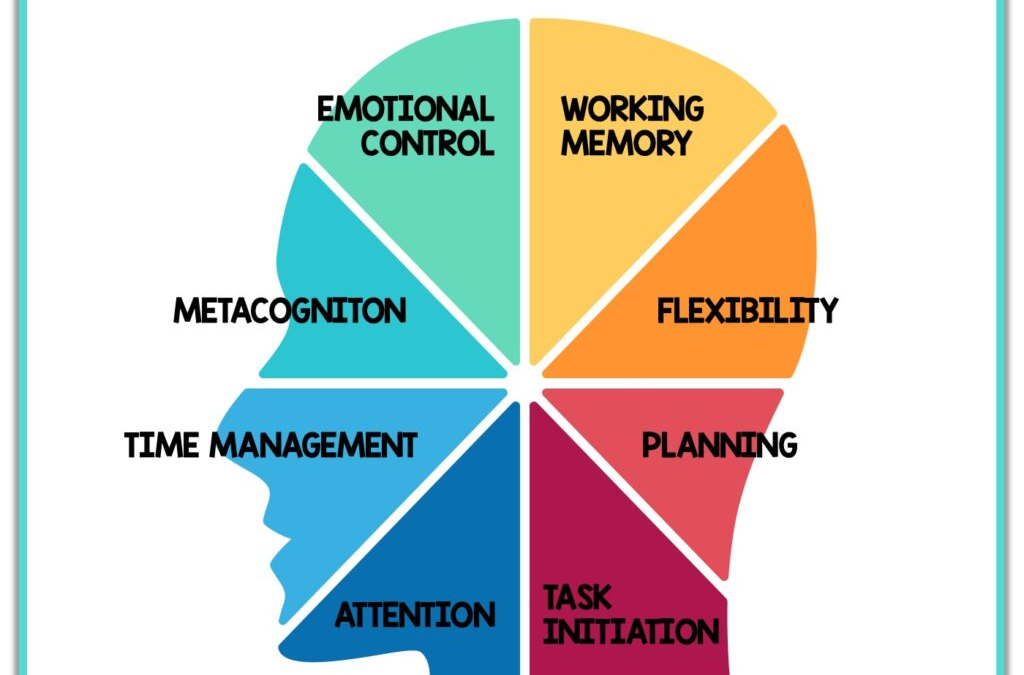
What is Executive Functioning?
Introduction
Doing well in high school isn’t just about being smart. You also need certain skills to manage your work, stay organized, and follow through on what you start. These are called executive functioning skills—like the brain’s “manager,” helping you plan, prioritize, and get things done.
For high school students, these skills are critical. When executive functioning is a challenge, it can impact everything from turning in homework to managing stress. Strengthening these skills doesn’t just improve grades—it boosts confidence, independence, and overall well-being.
Why It’s Essential for High Schoolers
High school brings more responsibility. Teachers give fewer reminders, projects last weeks instead of days, and your schedule gets busier. Without solid planning and organization, it’s easy to feel overwhelmed.
For example, you might fully understand the material for a paper but procrastinate until the night before it’s due. Or you might forget your math book at home because your backpack is messy. That’s not laziness—it’s often a sign that your executive functioning skills need support. Over time, weak executive skills can hurt grades, increase stress, and lower confidence.
What It Looks Like in Daily Life
Picture this: a student has a biology test Friday, soccer practice every day, and an English essay due Monday.
- With strong executive functioning – They plan their week in advance, review a little each night, start the essay midweek, and have their soccer gear ready the night before.
- Still developing these skills – They wait until Thursday night to study, leave notes at school, and scramble to write the essay Sunday night.
The difference isn’t effort—it’s having the right systems in place.
Executive Functioning & Mental Health
Struggling to manage schoolwork often leads to constant stress. Students may feel guilty or frustrated, especially when comparing themselves to peers who seem organized. Over time, this can hurt self-esteem and lead to burnout or anxiety.
Take a student who keeps putting off a big project—they might think, “I’m just lazy” or “I can’t do this.” In reality, they just haven’t learned how to break tasks into smaller steps or make a realistic plan. Once they learn these skills—organizing time, splitting up big tasks, and setting deadlines—they feel less overwhelmed, more motivated, and better able to handle stress.
Skills to Strengthen Executive Functioning
- Track your tasks – Use a planner or notes app to log homework, tests, and deadlines. Seeing tasks visually helps you plan ahead.
- Create daily routines – Consistent times for homework, meals, and sleep give structure.
- Use timers – Set alarms for task deadlines to create urgency and prevent procrastination.
- Avoid distractions – Keep phones and notifications off or in another room while studying.
Conclusion
Executive functioning isn’t something you either have or don’t—it’s a set of skills you can build. By improving planning, organization, and time management, students can reduce stress, boost performance, and feel more in control of their schedules. The earlier these habits are developed, the better prepared students will be for challenges in school and beyond.